
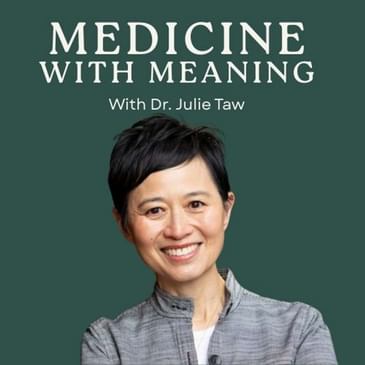
Welcome back to Medicine with Meaning! In this episode, Dr. Julie Taw delves into a topic that often goes unnoticed in the fast pace of modern life—our “mental diet.” We explore how our daily consumption of information, noise, notifications, and emotional energy can nourish or dysregulate our nervous systems just as much as the food we eat. Dr. Taw unpacks the impact of digital overload, constant stimulation, and the challenge of finding presence amidst endless distractions. Together, we examine the subtle ways our environment shapes our mood, sleep, and stress levels, and Dr. Taw shares gentle, realistic strategies for reclaiming our attention, protecting our wellbeing, and reconnecting with ourselves. Whether you’re feeling frazzled by your devices or simply curious about how to bring more calm to your days, this conversation offers thoughtful reflections and actionable steps toward a steadier, more mindful life.
00:00 Understanding the mental diet concept
05:08 Impact of constant digital stimulation
09:26 Managing sensory input and news consumption
11:11 Feeling time accelerate with phones
13:49 Perceptions of time as a child
19:09 Practicing mindfulness with social media
20:38 Getting lost in the algorithm
23:32 The distraction of social media
27:17 Struggling with social media habits
31:25 Mindful media consumption discussion
34:17 Identifying nervous system dysregulation
38:50 Mental and emotional load explained
43:12 Family TV vs. Phone Distraction
46:26 Managing the wellbeing ecosystem
48:32 Balancing technology and wellness
54:04 Offering a free nervous system guide
55:21 Closing remarks and farewell
The Mental Diet: Protecting Your Attention in an Overstimulated World
In our fast-paced digital age, it’s easy to think of “diet” as something that only involves food. But as Dr. Julie Taw highlights in the latest episode of Medicine with Meaning, our mental diet – everything we consume intellectually, emotionally, and energetically – plays a profound role in our wellbeing 00:00:30.
Redefining Diet for the Modern Era
For most of us, diet refers to what we eat. But Dr. Julie expands this definition to include the constant influx of information, conversations, social media, emails, news, and even background noise 00:01:50. Living in a bustling city such as New York, she notes, means the nervous system is constantly absorbing signals, whether or not we’re aware of them. This constant load can either nourish or deplete us, just like food 00:02:38.
The Physiological Toll of Overstimulation
Our brains and nervous systems weren't designed for relentless stimulation. Every ping of a notification, every breaking headline, every emotionally charged post demands a response from our bodies 00:05:08. Dr. Julie explains that even if isolated inputs seem insignificant, their cumulative effect is enough to keep the nervous system chronically activated. The result? Many people experience anxiety, irritability, scattered thoughts, or the paradoxical “tired but wired” feeling 00:05:51. The lack of true downtime can push us into a state of sympathetic overload—always “on,” always bracing 00:06:41.
Why We Underestimate Digital Load
It has become so normalized, Dr. Julie observes, that most of us don’t even notice how much we’re consuming digitally 00:07:32. The phone is an ever-present companion—from idle moments in line to walks through the park—making constant engagement with screens second nature. Social media, in particular, has replaced much of what television used to occupy, serving as entertainment, news, and connection all in one device 00:08:14.
This constant input accumulates. Each bit may seem trivial, but together, they leave our nervous systems no opportunity to rest 00:09:14. As Dr. Taw notes, many mistake the resulting fatigue, distraction, or lack of motivation for laziness, when really it’s just a lack of adequate mental rest 00:09:26.
The Disconnection Paradox
One of the most insidious effects of digital overstimulation is how it disconnects us from ourselves and each other. Modern technology facilitates connection, but also increases isolation when used mindlessly. “It's so hard to sit with ourselves now more than ever,” Dr. Julie shares 00:24:16, emphasizing how we often reach for our phones to avoid solitude or emotional discomfort. What may feel like relaxing “numbing out” on Instagram is actually denying the nervous system real recovery 00:28:09.
Recognizing Signs of Overload
Symptoms of nervous system dysregulation—such as insomnia, anxiety, fatigue, brain fog, irritability, or digestive issues—can often stem from this relentless input 00:34:31. Dr. Taw recommends pausing to reflect: are you truly comfortable with how much time you spend online? If the answer is no, it may be time to reconsider your mental diet 00:37:47.
Gentle Shifts Toward Mental Spaciousness
Rather than advocating for perfection or total digital detox, Dr. Taw encourages small, mindful changes that grant your nervous system moments of recovery 00:48:32. Some practical, gentle shifts could include:
Not checking your phone immediately upon waking 00:49:26
Turning off unnecessary notifications 00:49:49
Taking walks without podcasts or music 00:49:55
Allowing a few quiet minutes between activities 00:50:03
It’s not about rejecting technology, but about inviting small moments of silence, presence, and intentionality. These “micro-pauses” help rebalance our overstimulated systems and nurture deeper self-connection 00:52:06.
Finding Presence and Choice
Awareness is the starting point. By noticing our habits and gently experimenting with brief breaks from input, we can reclaim our attention and cultivate resilience. “It’s these small moments of quiet and spaciousness that can really matter more than people realize,” Dr. Taw assures listeners 00:51:54.
If you’re feeling overwhelmed, you don’t have to overhaul your life. Start by reclaiming just a minute or two of stillness each day. Your nervous system—and your sense of self—will thank you.
Show Website - https://medicinewithmeaning.com/
Dr. Julie Taw's Clinic Website - https://julietawmd.com/
Free Guide - https://go.julietawmd.com/reset
Dr. Julie Taw's Instagram - @julie.taw.md
Media/Podcast Partner: TopHealth - www.tophealth.care
“Disclaimer: Informational only. Not medical advice. Consult your doctor for guidance.”