
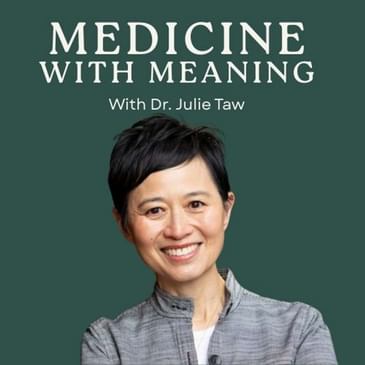
Welcome back to Medicine with Meaning. In today’s episode, Dr. Julie Taw dives deep into the hidden ways our daily lives can drain and recharge our energy. If you’ve ever found yourself feeling constantly tired, struggling to bounce back no matter how much you rest, or wondering if exhaustion is simply part of modern adulthood, this conversation is for you.
Dr. Taw and her guest explore why chronic fatigue is so widespread (especially for women in midlife), how stress and overstimulation impact our physical and emotional vitality, and why “doing more” rarely leads to true renewal. Together, they uncover the difference between physical tiredness and lifestyle depletion, the invisible mental and emotional labor that quietly exhausts us, and practical steps to identify what truly restores our energy.
If you’re ready to move from pushing through exhaustion to creating an ecosystem of support for your well-being, tune in for practical insights, compassionate guidance, and actionable strategies to reclaim your vitality, one small, meaningful change at a time.
00:00 Understanding different types of fatigue
06:21 Chronic stress and recovery explained
10:23 Rethinking and managing personal energy
11:28 Rethinking rest and recharging
14:38 Common causes of burnout
18:00 Managing energy and feeling vibrant
24:09 Using energy beyond physical movement
26:15 Understanding subconscious and self-awareness
28:58 Addressing energy leaks in life
33:37 Finding what energizes you
35:28 Finding clarity in nature
38:58 Prioritizing rest and restoration
43:14 Talking about treats and biology
46:15 Finding balance in healthy eating
49:49 Closing thoughts and how to connect
Reclaiming Vitality: Insights from Medicine with Meaning
In a society where exhaustion is widely accepted and even expected, especially among women in midlife, the latest episode of Medicine with Meaning featuring Dr. Julie Taw explores how to differentiate true physical fatigue from the draining effects of modern living. The conversation encourages listeners to reflect on the subtle ways energy is depleted and offers guidance on how to restore and nurture vitality in meaningful, sustainable ways.
Normalizing Exhaustion: The Invisible Burden
One of the central themes Dr. Julie Taw discusses is how exhaustion becomes normalized. When everyone around us is “busy, stressed, under-rested, or pushing through,” feeling depleted starts to seem like an inevitable part of adulthood, responsibility, and being needed. This is particularly pronounced for women, who often have long-standing habits of caring for others first, leading to a disconnect from their own needs.
Over time, many wear exhaustion as a badge of honor, rarely pausing to question why they feel depleted. The result is a society in which feeling tired is common but not truly accepted as normal or as something that must be endured.
Beyond Physical Fatigue: The Lifestyle Component
When patients report feeling constantly tired, Dr. Julie Taw begins by helping them become curious about what they’re actually experiencing. Not all fatigue is physical; it may stem from hormone changes, inflammation, nutrient deficiencies, or nervous system dysregulation. Yet, often, people are experiencing a kind of depletion that comes from living too pressured and disconnected from their bodies' true needs.
Questions such as “When do you feel most depleted?” and “What helps, even a little?” unlock insight into whether the issue is solely low energy or if quiet drains are built into daily life.
Chronic Stress and the Nervous System
Chronic stress shifts the body into a state that prioritizes protection over restoration, impacting sleep, digestion, hormones, and mental focus. Even periods of rest do not necessarily lead to recovery if the nervous system remains in a perpetual “fight or flight” mode.
Recovering from tiredness requires more than just rest; it demands helping the body feel safe enough to relax into a state of restoration. This is where practices like art, music, or time in nature can nurture the nervous system and create genuine renewal.
Everyday Energy Drains
The most common drains Dr. Julie Taw observes are “invisible labor”: managing logistics, anticipating needs, and making decisions without support. Physically, poor sleep, blood sugar swings, undernourishment, and over-caffeination play major roles. Digitally, overstimulation from screens steals attention and energy, leaving little room for reset and silence.
Recognizing that these drains often act in concert, Dr. Julie Taw emphasizes the importance of viewing health as an ecosystem where multiple factors interplay.
The Power of Awareness and Small Changes
Awareness is a recurring motif. Once you identify what drains and charges your energy, you can make small shifts that support your vitality. Rather than adding tasks or supplements, the most healing action can be removing friction, stepping back from what is dysregulating, and reducing demands on the body.
Energy stewardship involves not taking your energy for granted but deliberately protecting, building, and renewing it. This shift from asking “why can’t I keep up?” to “what helps me feel clear and grounded?”fosters a more resilient, self-compassionate existence.
Cultivating Your Ecosystem: Self-Honor Over Indulgence
Restorative practices walking outside, music, meditation, nourishing meals, time with safe people are acts of self-honor, not indulgence. Recognizing your needs and honoring them creates space for vitality to arise naturally, rather than being forced.
A Simple Practice to Begin
The episode closes with a practical exercise: daily energy check-ins. At the end of each day, ask, “What drained me today?” and “What gave something back?”. Noticing these patterns is where change begins. Small, intentional shifts create conditions for the body to feel supported and vibrant.
Medicine with Meaning reminds us: vitality isn’t something to force; it’s something we cultivate by respecting and nurturing our own needs. By shedding light on the hidden drains in our lives and honoring what restores us, we reclaim the energy and resilience needed for a full, meaningful life.
Show Website - https://medicinewithmeaning.com/
Dr. Julie Taw's Clinic Website - https://julietawmd.com/
Dr. Julie Taw's Instagram - @julie.taw.md
Media/Podcast Partner: TopHealth - www.tophealth.care
“Disclaimer: Informational only. Not medical advice. Consult your doctor for guidance.”
People normalize exhaustion because it is everywhere. When everyone around you is busy, stressed, underrested, or pushing through, it starts to look normal. And over time, many people begin to wear exhaustion almost like it's part of adulthood. Part of being responsible, part of being needed, part of having a full life. This is especially true for women, and especially in midlife. I'm Dr. Julie Ta, and I'm so glad you're here. In our last episode, we talked about the midlife reset, that moment when your body and life begin asking for change, and when many people start recognizing the need to care for themselves differently. Today we're going to explore something very practical and very revealing. Energy drains and energy chargers. So many people think their fatigue or overwhelm is simply due to getting older or being busy. But often it's not just what we're doing, it's how our daily lives are structured, how supported or unsupported our nervous system feels, and whether the way we're living is giving energy back to us. So today we're going to talk about how to recognize what drains your energy and how to begin reclaiming your vitality in small, meaningful ways. Let's dive in.
SPEAKER_00Dr. Julie, when patients tell you they feel constantly tired or depleted, how do you begin helping them understand the difference between physical fatigue and lifestyle-driven energy dreams?
SPEAKER_01Well, I usually start by helping them get curious about what they're actually feeling. Because not all fatigue is the same. Sometimes it is truly physical. It may reflect poor sleep, hormone changes, inflammation, nutrient deficiencies, or nervous system dysregulation. But sometimes what people are calling fatigue is also a kind of depletion. It's a depletion that comes from living in a way that is too pressured, too disconnected from what their body needs. So I start asking simple questions. When do you feel most depleted? What seems to make it worse? What helps? Even a little. Tired emotionally? Or tired in all of those ways? That helps us begin to see whether this is only about low energy or whether there are quiet drains built into the way they're living.
SPEAKER_00I'm so glad you're you brought up all these questions because I do think that fatigue is one of those things that um it almost people feel not embarrassed, but what would be the correct word? Like not a lot of people express that they feel tired and then they just go about their lives feeling that way. Because it's there's almost kind of like a shame to feeling tired in this overproductive uh world. So why do you why do you think so many people normalize feeling exhausted and and assume is just part of modern life?
SPEAKER_01Yeah, I think people normalize exhaustion because it is everywhere. When everyone around you is busy, stressed, underrested, or pushing through, it starts to look normal. And over time, many people begin to wear exhaustion almost like it's part of adulthood. Right? Part of being responsible, part of being needed, part of having a full life. This is especially true for women, and especially in midlife, there's often a long habit of taking care of everyone else first. So you get used to overriding your own needs. Um, you stop noticing how depleted you really are. So by the time many people finally pause and ask, Why do I feel this way all the time? They've often been disconnected from themselves for quite a while. And that's important to name. Because just because something is common doesn't mean it's normal. And definitely doesn't mean you have to accept it.
SPEAKER_00Thank you for bringing that up. Um we often do confuse c common with normal, and they don't mean the same thing, right? But we we think it it does. And so from a biological perspective, how do chronic stress and nervous system activation contribute to ongoing fatigue?
SPEAKER_01When the body is living in chronic stress, it begins organizing itself around protection rather than restoration. So that affects sleep, it affects blood sugar, it affects digestion, hormones, inflammation, muscle tension, and certainly mental focus. So even if someone lies down, even if they're technically resting, the body may not fully shift into the kind of repair state that creates real renewal. That's why so many people say I'm resting, but I don't feel restored. And it's because rest is not always the same thing as recovery. Recovery happens when the system feels safe enough to soften, safe enough to come out of that chronic state of bracing and overdrive. So the goal is not just more rest like on paper, right? But it's about helping the body shift into that rest and recovery mode. Um, and you know, this is about well, it happens at the level of the nervous system and our mind. And we've talked a lot about how that parasympathetic nervous system is where we have rest and recovery. And I think most of us in that busy go-go lifestyle were constantly in sympathetic nervous system or fight or flight, chronic stress physiologically.
SPEAKER_00And was there a time in your life when you realized that certain habits, environments, or expectations were quite quietly draining your energy?
SPEAKER_01Absolutely. Um yeah, there were seasons in my life when I was doing everything I needed to do on the outside. So, you know, um, I was showing up, being responsible, caring for others, meeting expectations. But underneath that, I think I was more depleted than I fully realized. And what became clear to me was that it wasn't always like big, obvious things. Sometimes it was the accumulation of smaller things. Um for instance, just rushing all day long, um you know, too much input, not enough quiet time, not enough space between responsibilities, or you know, staying mentally on all day long, you know, even after the workday is done, and certainly putting my needs last and not even noticing that I was doing it. So that wasn't that was an important realization for me. And it's because it taught me that depletion isn't always dramatic, and sometimes it happens gradually, and so you don't notice it. And when we're living um in this way that keeps asking more from us than it gives back, well, we're gonna feel depleted. So um it allowed me to change the way that I think about energy. It's not something to push through, but it's something to care for more intentionally and to not take it for granted, you know. Um, I think everybody, you know, understands how you have to fill up your car's gas tank. But when it comes to our own human body, people don't think of energy that way, that we need to, you know, fill up our gas tank and figure out what are the things that fill up my gas tank, what are the things that you know makes my car, my engine rev higher and and burn through more gas. And so it's really about taking inventory of those things and being aware. Um, I think when I wasn't aware, that was the challenging part, just not understanding why my energy was so low.
SPEAKER_00That's so interesting that you mentioned this. It's like a lot of us think that, you know, when you feel fatigued, the solution is to rest. And rest, we think of it as lying down or sleeping, but we can actually be tired of other things, not not that that won't be fixed by simply sleeping or resting in a conventional way. But for example, I felt really drained in my life in the past, and I remember my friend was like, You need to do art. You haven't been doing your art. And I thought, oh okay. Then it's something that it might this tiredness that I feel might not be something that will just go away with sleeping.
SPEAKER_01That is really interesting. Um so of course rest is important and getting enough sleep is just foundational. But sometimes you know, it's not enough where you're where, you know, doing that, you you're still feeling drained. And that's a really interesting point your friend brought up about doing your art. And I would say that that's probably because when you're doing art, you are doing something, well, assuming you enjoy it, it relaxes your nervous system. And perhaps it allows you to get in that flow state. And that is very nurturing for the body. And it is a way of, you know, dialing down that chronic fight or flight. I think that's you know, sort of the beauty of art. Um, those people who enjoy creating art, you know, you really get into a more relaxed nervous system. But it's also, you know, I think where we connect with ourselves, where we find meaning for ourselves. And um, you know, that may be a part of it too, to really just, you know, dial down the the stress response in your body and help you connect with what you enjoy doing.
SPEAKER_00That's so beautifully explained. It makes a lot of sense when you put it that way. Like you you are resting your nervous system, even if you're not precisely resting your body, but your thoughts are slowing down because you're connecting perhaps with the present moment. You're leaving stress aside and that has an effect on your on your body. And Dr. Julie, on that note, in your practice, what are the most uh common energy drains that you see in people? Emotional, physical, mental, uh, environmental.
SPEAKER_01Well, there are a few things that come up again and again. Emotionally, one of the biggest strains is carrying too much for too long without enough support. So a lot of people are holding invisible labor all day. You know, they're managing logistics, anticipating the needs of others, making decisions, keeping everything together, and that all takes energy. Physically, while I often see poor sleep, blood sugar swings, undernourishment, over caffeinating, under-recovering, and trying to function on a body that hasn't had enough steadiness. And environmentally, I think the biggest one, and I'm definitely guilty of this one, is digital overload. So, you know, being on our phones, our screens, too many notifications, too much noise, and it may not even be physical noise, right? But noise in our head, too much stimulation, too little silence. I think that's that's a big one. And I worry about that in in young people and teenagers, you know, who grew up in the generation of cell phones, like they're not used to sitting in silence or being bored, you know, like I was as a child in the 70s and 80s. Um well, certainly, you know, too little time outside and too little room to reset. So sometimes people think they're just tired for no reason. Um, but when we slow down and really look, there are often multiple drains happening all at once. That's why I always come back to the ecosystem because energy is rarely about just one thing. It's really, you know, many things that are interplaying with our ecosystem for health.
SPEAKER_00This is so important. This is what an important topic, really. Yeah, you just brought something very important again. I can't stop saying that. But I do feel like I hear a lot of people being tired, or if they don't mention it, but you can see it, I myself feel that way as as well. And and then I just try to put it aside because where why? It's almost like you can't justify being tired. But you mentioned uh invisible labor, and that's so true. You're working even when you're not doing anything. You can't see it, but your mind is going, going, going, or worrying, or anticipating what's gonna happen tomorrow. And all that affects the body and affects the mind, and and it makes us tired. It drains our energy. That's so important. Yeah.
SPEAKER_01Yeah, I I was gonna say, you know, uh there are certain biological things that you should look at, right? Um before we talk about this realm of energy. Um, you know, certainly making sure that uh you have all, you know, your your nutrients uh and they're in sufficient levels and that your hormones um are optimal and that um uh you know your um blood work all looks good. And you know, so some of those are just basic blood work that you want to look into. But I think what we're talking about is when all of that is normal and you know nothing is obvious, but you're still feeling tired, and you may be doing all the right things, you know, you're you're eating well, you're sleeping well, but you're still tired. And um, I mean there may be some other, you know, things to look at more deeply with your doctor. But um, if everything is you know looking normal, then these are some of the questions that you really want to ask about how you're managing your energy. Um and that they may be more subtle, and it you know, it doesn't necessarily need to be something dramatic had happened, but it's these little things day in and day out that we're talking about here that can um have you feeling depleted and not feeling vibrant. And and this idea of you know, vibrant health and vitality um is something that we all want to feel. We want to feel good. And um so these are some of the deeper layers you want to look at.
SPEAKER_00And you know, waking up eager for the day. Or maybe that's a big stretch for a lot of people listening to this, but waking up fresh. Like I I wonder how many people actually wake up like super fresh, ready for the day.
SPEAKER_01Or is it that we wake up a little bit like dragging ourselves to, you know, the shower or or the coffee machine or yeah, in an ideal world, you want to wake up feeling refreshed, and there are many different factors that might contribute to that, and we can you know create another episode for that. Um, but yeah, you may be just clocking in, you know, eight hours of sleep, but maybe it's not you know well-rested sleep. Um, or if your nervous system is always, you know, in that chronic fight or flight, um it takes a lot of energy in our body and uh it doesn't allow you to get into that rest and recovery mode.
SPEAKER_00And on that note, how do factors like sleep patterns, blood sugar, stability boundaries, and digital overload, which we just uh mentioned, influence how energized or depleted someone feels?
SPEAKER_01So these things matter much more than people realize. Sleep timing matters because the body loves rhythm. It's not only about how many hours you sleep, it's also about whether your system can count on a consistent pattern of rest and wakefulness. Blood sugar matters because Energy depends on steadiness. If someone is spiking and crashing their blood sugar throughout the day, they may feel foggy, shaky, irritable, anxious, or exhausted, and not realize physiology is a big part of that. Oh, and boundaries, and I love this one. Boundaries matter because without them, the nervous system never really settles. It's like it's always on high alert, always available, always responding, always absorbing. So your body stays in this state of you know low-grade vigilance, or maybe it might even be high alert, right? Depending on you and your nervous system. Um, and digital overload matters because attention is energy. When energy, well, let's say, you know, when our energy I want to say energy, but it's actually when our attention, you could make them synonymous actually, when our attention is constantly being pulled in different directions, people often feel drained before the day is even over. Um, you know, I I definitely noticed that uh for myself when I am, you know, reading the paper on my phone or I'm on Instagram, um, depending on what I'm reading, you know, it can definitely um either energize me or drain my energy. Um and then it does just take me away from myself. Um and I think you know that connection with ourselves is so important to reset, to like replenish. So these aren't small lifestyle details, they are the foundation of how we feel.
SPEAKER_00Yeah, and something that that's is really becoming clear to me with this conversation is that you don't just use your energy when you move your body. Like while you run, you're not just oh I I'm tired because I used all this energy. You use you use your energy when you think, like you say when you with your at through your attention. And it made me think about the times that I I dream a lot, and sometimes I dream so much that I wake up tired. Then physically move my body, but it's just then you know, I'm using my brain perhaps, or maybe I'm stressed during my sleep and and therefore I'm not well rested. So I know you wanted to emphasize that let's, you know, be aware of what's going on in our bodies, physically always be mindful of that and check, do our blood work, and all of that is super important. I I don't mean to take away from that. It's just that I think that we put this aside. We put we often tend to put this part aside, or we don't think about how, like you said, spending time so much time on your phone can really deplete your energy.
SPEAKER_01Yeah. That's so interesting. Um, yeah, sleep. Um, I mean, we can certainly be stressed in our in our sleep in our in our dreams, right? We've all had nightmares and you can feel fight or flight. You know, if you happen to wake up during a nightmare, you can feel the fight or flight response in your body. And if you're doing that throughout the night, well, uh, you know, it it may deplete your energy, right? But you bring up something interesting, and I I I I I think I am going to touch upon it, it's the idea of you know what's in our subconscious. That certainly comes up in our dream state. But um, you know, subconscious is what we're not conscious of, right? We're not aware of it. And so any sort of activity or exercise or just being present with ourselves, if you can bring things from the subconscious up to the conscious, then we have awareness. And awareness is how we make change. And so, you know, awareness of w what drains your energy, what, you know, um charges your energy, of course, but also, you know, deeper things, you know, that may be causing fight or flight nervous system in your body, and you're not even aware of it. And so that does require sitting with yourself in quiet time, see what comes up. And you know, sometimes we don't like what comes up, um, but it's there, and it's a important to let it come up and then bring awareness to it so that we can address it if if you want to live consciously.
SPEAKER_00Dr. Julie, something that just came up is maybe something so simple as like saying something that you've been keeping inside, like expressing and that might manifest manifest in your dreams, or in many ways, it's just like uh something that is keeping your atten so much of your attention that is draining your energy.
SPEAKER_01So that's that's called naming it, right? Putting a name to it, identifying it. Um and it also almost releases it out of your body, right? When you name it. Um like a almost physical release from your body. But but more importantly, when you name it, you identify it and bring it to your consciousness and awareness. Um otherwise, it doesn't go addressed. You could still not address it. Many people choose not to. Um, but I think uh, you know, for myself, um, I do want to be aware of things that might be triggering my nervous system to be in chronic fight or flight.
SPEAKER_00Many people try to solve fatigue by adding more supplements, routines, productivity strategies. Why is removing energy drains sometimes more powerful?
SPEAKER_01Well, if a system is leaking energy all day long, adding more support only goes so far. There's absolutely a place for supplements, there's a place for routines, there's a place for targeted support. But if someone's life is organized around chronic overextension, overstimulation, poor recovery, and constant pressure, then we also have to look at what is draining them in the first place. Sometimes the most healing thing is not adding another task. It's really reducing friction. It's stepping back from what is dysregulating, it's making the day less demanding on the body. And I think that can be very freeing for people because they realize healing is not always about doing more and doing it perfectly. Sometimes vitality begins when we stop asking the body to compensate for what is unsustainable.
SPEAKER_00And Dr. Julie, you often talk about vitality as something that emerges when the ecosystem is supported. What does it feel like when someone begins shifting from a reactive living to more intentional energy stewardship?
SPEAKER_01So earlier we talked about awareness. I think one of the biggest shifts is awareness. Instead of constantly cleaning up after depletion, people begin to notice what helps them stay steady in the first place. They become more honest about what certain situations cost them, they recover more intentionally, and they make choices with more respect for their actual capacity. And they stop treating energy like something that should always be available on demand, and they begin to see it as something to protect, something to build, something to renew. There's also often a deep emotional shift. People feel less at war with themselves. They stop asking, Why can't I just keep up? And they start asking, What helps me function well? What helps me feel clear, grounded, and well supported? That is a very different relationship with vitality. I think it's like we all want vitality, but it's less about forcing and it's more about living in a way that creates resilience.
SPEAKER_00No, absolutely. You we all want vitality, but what are we actually doing to create that? And I think as you were sharing this with us, what I identified is this part of nurturing something to nurture ourselves so that we have that energy that we want to have, that we're seeking, not forcing ourselves to have that energy.
SPEAKER_01And it feels like you know, we're always trying to like increase capacity. I can do more. And then we blame ourselves when you know we don't measure up to that capacity, you know, that we want for ourselves. And I think it's really hard for us to accept and allow that our capacity is limited. But we can find ways to um learn to nourish, you know, not just our body, but our mind and I will call it spirit, but you know, what what brings meaning to our lives, our connections with each other, um, I guess first with ourselves and then with each other. And so each of us has different ways where we feel nourished in that deeper sense, where we feel replenished. And it's really about figuring out what those are. What are the things that energize me? What are the things that deplete my energy? And recognizing and honoring what our capacity is. And that changes from season to season, even day to day. But it it's it's I think um just recognizing that we all have a certain capacity, and uh the the solution is not to like increase, I mean, I think we I was gonna say increase the capacity, but I think we want to we we all can increase our resilience, and the way to do that is by finding all the things that increase our energy. That's what builds our resilience. And when our resilience um is larger, is i i is is um bigger, then our cab our capacity can grow with it.
SPEAKER_00As as you were mentioning this capacity um concept, I I was thinking of how it when I try to increase my capacity, I feel like I it I don't. I just I just push through things. I I am able to accomplish things, but I don't feel like I have more capacity. I just feel like I force myself through more things to do. And when I'm uh in nature, for example, and I just am not doing anything, then my capacity, I feel like it naturally increases. I have the the best ideas that I ever have are when I'm looking at some trees or the ocean, or so it it's like it I'm not forcing to have more capacity, but because I let all the noise that you I guess you were speaking about earlier, maybe the digital um noise that accumulates and all these other things that we've talked about, when I just sit down in nature, they all kind of come off, and then I feel like I have more space. And that's what I personally recognize as capacity.
SPEAKER_01That's a beautiful way of putting it. And we we do know that um being in nature calms our nervous system and it allows expansion, right? Especially like, you know, if you're in a place of nature that's just big, right? Or you see the sky or the stars at night, and it it does just expand us and you know helps us recognize that um, well, there's a larger world outside of us in our minds, right? And I think in our day-to-day, you know, sometimes um all the all this all the things that we deal with in our day-to-day um certainly stress our nervous system and almost shrink our capacity, like you're saying, um, whereas being in nature makes us more expansive and expands our capacity with that.
SPEAKER_00And I and I don't know what you think, but I think it has to do with confinement as well. Like we're indoors in smaller spaces, and then not only that, we've we're confined to a space, but then we're confined to our screens. So it like keeps getting the space keeps getting smaller, the space in which we live. Yes.
SPEAKER_01Yeah. Um, certainly, you know, I think anybody who works from home, myself included, um, you know, there are days where I don't go outside. And you you feel a difference. I feel a difference in my body, you know, it's just everything feels tighter and I just don't feel as good. And I know the minute I go outside, especially if I can go walking in the park, um everything shifts for me. And though, you know, you think, oh, going outside and walking takes energy, it's quite the opposite where where I feel recharged. And yes, also seeing the trees does help to just calm my nervous system. So um, yeah, our world sometimes gets too small if we work from home from a computer screen.
SPEAKER_00And Dr. Jun Julie, speaking of things that um that charge your energy rather than deplete it, how can we uh identify those things that restore our energy, that regulate us, that become an act of self-honour rather than in indulgence?
SPEAKER_01Yeah. Well, um we talked about awareness, right? Um, paying attention to ourselves, I think it's really key to identifying what charges our energy um versus what depletes us. And I would say that um this is essential. And that, you know, what restores us, it's not like it's extra or a luxury. I think many people have been taught to see, you know, things like rest or quiet or pleasure or spaciousness as something they have to earn, something they get after everything else is done. But in reality, those things are often what make it possible for us to show up in a way that you know we want to show up. It helps us show up well in the first place. So when you begin identifying your energy chargers, so for me to walk outside, um certainly time in the sun, music, um, prayer or meditation, movement, a nourishing meal, a slower morning, time alone, time with safe people. I think that's important. It's not just time with people, but people you feel safe and just comfortable around. Um, these are all things that you know can charge your energy. Certainly, you know, these are personal to me, and that you're not being indulgent when you do all these things. And so you start learning what helps to regulate your entire ecosystem and certainly your nervous system, and you learn the conditions that your body needs in order to feel well. To me, that is an act of self-honour, self-love, self-compassion. And it says, my needs matter. My body matters, my inner life matters. So that is not selfish, that is wise care.
SPEAKER_00I love wise care. That's a beautiful thing. And Dr. Julie, um, just one question on the topic of indulgence. I know that, for example, there are food choices that are more nourishing for the body than others. But if a you know uh ice cream makes you feel you know, you feel like you want to eat ice cream because it makes you feel good one day. I know there's other things that you can eat that will be technically better for your body, but if you fight that urge, can that be worse for your nervous system than actually just eating that ice cream without guilt and enjoying having a treat?
SPEAKER_01For sure. I mean, um, first of all, you may not be enjoying it as you're eating it, right? Because you're feeling guilty. So if you're gonna have the ice cream, enjoy it. Eat it mindfully, be fully present, you know, and taste everything. And then to not beat yourself up afterwards. I think so often that guilt that I shouldn't have done that, you know, just causes stress nervous system, right? Fight or flight. And so that can be damaging. So if you're gonna have the ice cream, enjoy it. But I love how you use the word treat, and I say this a lot to my patients. Um, I want all of us to enjoy a treat. A treat implies that it's from time to time, it's not a daily thing, and we should give ourselves treats. But you know, you have to look at it in the context of the ecosystem. You know, what is your biology? Do you have issues with blood sugar regulation? Um, you know, is your blood sugar gonna spike after that ice cream and then is it gonna crash? Or do you have a dairy intolerance like I do, and you're gonna have a stomachache and GI distress afterwards? And um So you have to put it into the context of you. And you know, some people can eat ice cream three times a week and it won't bother them. Their blood sugar can handle it, and lucky them. But then there's some of us where that ice cream is gonna cause us to suffer afterwards. And I mean physical symptoms. And you know, blood sugar dysregulation can also be very energy draining, where you know, you're gonna feel all sorts of symptoms afterwards, you won't feel good. So it's really in the context of each person's ecosystem. And some people um can eat more ice cream than others. I myself uh I love ice cream, but it it is an occasional treat. And quite frankly, um, I feel so miserable afterwards that it doesn't feel like nourishment to me. And then you may want to ask, well, you know, are there other ways to nourish in this moment? Could it be a hug, you know, from a loved one or your pet? Um, maybe you you'll find some nourishment there. So um, you know, it's complex, and and I I keep saying, well, maybe that's another, you know, entire podcast. Um, you know, the idea of are you needing some emotional comfort in that ice cream? Or, you know, you you're in Italy and the, you know, there is just delicious gelato that you should not deprive yourself of because it is so good. And, you know, we've traveled to places, you know, each of us probably where you know there's something really special there, and you should enjoy it and delight in it.
SPEAKER_00Yes. I I think it should be another episode because I want to ask you most a lot of questions about this. I think it's like the idea of like indulgence versus restraint, and it feels like they're all our opposites, but is there a point in the middle where yes.
SPEAKER_01I love that. The the the the middle way, balance. For sure, being too restrictive is harmful to our well-being, to our nervous system, to our mental health. And I think, you know, the there's a condition called orthorexia. It's um, you know, restricting f uh um um unhealthy food, like only eating what's healthy, and then getting, you know, kind of um, well, you know, getting upset if you eat something that's not healthy. It's a condition that's been described, you know. And um that is harmful, you know, to eat in a way where you're so scared to eat things because it might not be healthy. Um so yeah, we don't want to create restriction that becomes harmful. Um we and that may deplete your energy, you know, bringing it back to today's conversation around energy. And just, you know, putting that much thought to what you eat may definitely is energy depleting.
SPEAKER_00And okay, Dr. Julie, we've reached the end of our episode, but I have one last question for you today. Um, for someone listening who feels depleted, what is one simple exercise they can do this week to start identifying their own drains and charges?
SPEAKER_01A very simple place to begin is with a short daily energy check-in. So either at the end of the morning or on the end of the day, pause for just a minute and ask yourself two questions. What drained me today and what gave something back? That's it. So maybe it was rushing that drained you, skipping lunch, maybe that drained you. Maybe it was too much screen time, or maybe it was a difficult interaction that drained you. And then maybe a short walk helped your energy, or maybe a calm breakfast. Maybe putting your phone down earlier helped. Maybe sitting quietly for five minutes helped. You don't need a perfect system. You simply need to start noticing patterns because once you can see what depletes you and what restores you, you can begin making small shifts that are much more supportive of your energy. And often that awareness is where change begins. This is actually a key part of the work we do inside the well-being ecosystem program. Many people come in feeling exhausted or overwhelmed, and together we begin identifying the patterns that are draining their system, the small shifts that can help restore steadiness and energy. So it's not about doing more. It's about creating conditions where your body can feel supported again. So if this conversation resonates with you, I'll be sharing more about how you can join us soon. And if you'd like to connect with me, you can visit www.julie t md.com or send me a DM on Instagram at julie.ta.md. I truly love hearing from listeners and all questions are welcome. Thank you for joining me for this episode of Medicine with Meaning. Vitality isn't something we force, it's something we create space for. If this episode resonated with you, share it with someone who may be feeling depleted. And I'll see you next time. Thank you for listening.