
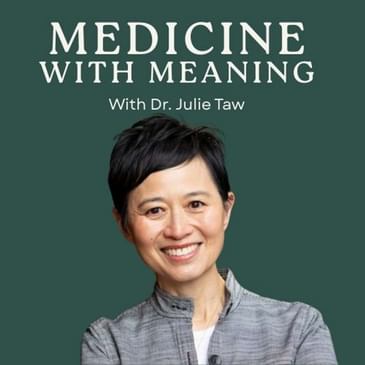
Welcome to Medicine with Meaning, where we dive deep into the hidden stories your body is trying to tell you. In today’s episode, host Dr. Julie Taw demystifies one of the most misunderstood aspects of our health: hormones. We’re exploring how these chemical messengers shape everything from energy and mood to metabolism and stress and why the symptoms you experience aren’t just random, but meaningful signals from your body.
Whether you’ve ever felt dismissed by “normal” lab results, struggled with fatigue and irritability, or wondered what’s really behind hormonal changes throughout life’s transitions, this episode offers a perspective shift. Dr. Julie Taw unpacks how hormones respond to our sleep, nourishment, stress, and daily rhythms, why they’re responders, not troublemakers, and how tuning into their cues can be a powerful act of self-care.
From practical steps for regaining balance to reframing menopause and perimenopause as an invitation for deeper alignment, you’ll learn how to move from frustration to compassion in your journey with hormonal health. Get ready for actionable wisdom and heartfelt stories that will help you see your symptoms and yourself in a new light.
00:00 "Hormones: Responders, Not Root Cause"
04:04 "Thyroid, Hormones, and Metabolism"
08:38 Stress-Induced Reproductive Adaptation
10:04 "Hormones: Responders, Not Root Cause"
14:56 "Listening to the Body's Signals"
16:25 "Listening to My Body's Needs"
21:09 "Symptoms Matter More Than Labs"
22:54 "Body as a Hormonal Ecosystem"
26:02 Hormones, Rhythm, and Balance
32:07 "Empowering Women's Menopause Journey"
36:44 "Finding Balance Through Simple Anchors"
40:06 "Hormones Communicate, Not Betray"
41:51 "Contact Dr. Julie Taw"
Listening to Your Hormones: A Compassionate Approach from Dr. Julie Taw
On the latest episode of Medicine With Meaning, Dr. Julie Taw dives deep into one of the most misunderstood aspects of health: hormones. For many, the word "hormonal" is synonymous with feeling out of whack, fatigue, irritability, weight changes, and cravings all get chalked up to “hormone problems.” But Dr. Julie Taw reframes hormones not as villains, but as vital messengers, guiding us to listen more closely to the needs of our bodies.
Hormones: Not the Trouble, But the Feedback
A central insight of the episode is that hormones are rarely the root cause of our symptoms. Instead, they function as responders, messengers that adjust to our everyday environment. “When someone says, ‘my hormones are out of control,’ what I often see is that the hormones are doing exactly what the body is asking them to do, but in a challenging environment,” Dr. Julie Taw explains. High cortisol? That’s your body’s response to stress. Low thyroid activity? Often a way for your body to conserve energy when stressed or under-nourished. Sex hormone changes? Frequently rooted in lifestyle factors like sleep, nutrition, and emotional stress.
This shift in perspective invites us to stop blaming our hormones and start asking: What are my symptoms telling me about the way I’m living?
The Hormonal Symphony
Hormones don’t function in isolation, Dr. Julie Taw cautions; they are more like a symphony orchestra, where each instrument (hormone) interacts with the others. The episode gives a breakdown of the key hormones:
Insulin: Sets the foundation by managing blood sugar. Stable blood sugar helps the rest of your hormones work smoothly.
Cortisol: Rises with stress and keeps blood sugar available, but chronic elevation can disturb other hormones.
Thyroid Hormones: Regulate metabolic pace and are highly sensitive to stress and inflammation.
Sex Hormones (Estrogen, Progesterone, Testosterone): These fluctuate with stress, nourishment, and life transitions, but are downstream responders, not the main drivers.
When one hormone is “off,” it often creates a domino effect throughout the network, impacting how you feel, sleep, mood, energy, and more.
Personal Experience & Practical Wisdom
Dr. Julie Taw shares her own journey: a busy career and motherhood left her feeling depleted, even as her labs came back normal. It was only when she began treating her symptoms as honest feedback, not as weaknesses to be overcome that real change happened. She protected sleep, nourished her body, and found time for small restorative practices, like breathing and stepping outside. This made life not perfect, but sustainable a crucial message for anyone feeling overwhelmed.
Listening Beyond Lab Results
One frustration many women share is feeling “off” hormonally when all tests come back within normal range. Dr. Julie Taw reassures us that labs don’t capture everything: “Your system can feel strained and it can show up as fatigue, anxiety, or sleep issues long before any lab abnormality.” She encourages patients to trust their symptoms and see them as valuable information, not something to be dismissed.
Hormones as Part of an Ecosystem
The episode brings a beautiful metaphor: our bodies are ecosystems, and hormones are shaped daily by our lifestyle sleep, nutrition, movement, and emotional rhythm. “Hormonal harmony isn’t about controlling hormones,” Dr. Julie Taw says, “but about creating rhythms that help the body feel safe and supported.”
Small, manageable changes like eating regularly, prioritizing sleep, or taking moments to slow down—can send repeated messages of safety to the body, helping hormones rebalance naturally.
Embracing Life’s Transitions
For women entering perimenopause or menopause, hormone shifts can feel destabilizing. But Dr. Julie Taw reframes these transitions as opportunities for deeper connection, clarity, and self-care. Rather than seeing symptoms as punishment, she invites women to ask, “What is my body asking for in this season?”
Final Takeaway
If you’re feeling frustrated by your symptoms, remember: your hormones are not betraying you. They’re communicating, offering feedback. Meet these signals with curiosity, and you’ll open the door to more compassionate, effective self-care.
For listeners longing for balance: Start with one small, steady anchor, protect your sleep, nourish your body, or pause for a moment of mindfulness. Healing begins not with fixing everything, but with listening compassionately to the wisdom within.
For more, visit Dr. Julie Taw at julietawmd.com or find her on Instagram @julietawmd.
Medicine With Meaning: making sense of your symptoms, one episode at a time.
Show Website - https://medicinewithmeaning.com/
Dr. Julie Taw's Clinic Website - https://julietawmd.com/
Dr. Julie Taw's Instagram - @julie.taw.md
Media/Podcast Partner: TopHealth - www.tophealth.care
“Disclaimer: Informational only. Not medical advice. Consult your doctor for guidance.”